The river, the road and the fort
A true story from the American desert West, told for young historians.
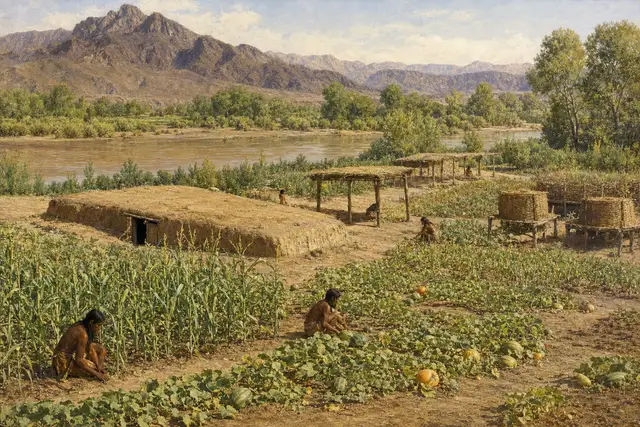
Mojave farm fields beside the Colorado.AI illustration · artistic interpretation
What happened? (The short version)
The Mojave people have lived beside the Colorado River for hundreds of years. Their name for themselves, Aha Macav, means "the people by the river." Every summer the river flooded and left behind soft, rich mud, perfect for growing corn, beans, pumpkins and melons.
In 1858, a group of families traveling west in covered wagons pulled by oxen, called the Rose-Baley wagon train, reached the river on a brand-new road. They cut down cottonwood trees that mattered a great deal to the Mojave, and their cattle grazed on Mojave land. The Mojave worried the newcomers planned to stay. On August 30, 1858, there was a fight at the river. A 12-year-old girl named Sallie Fox was the first to shout a warning. The families lost their animals and had to turn back.
The next year, in 1859, the U.S. Army came with hundreds of soldiers and built Fort Mojave on a bluff above the river. A brave Mojave leader named Cairook offered to be held prisoner in place of his people's older chief. He died trying to help other prisoners escape. After one more battle that summer, the Mojave made peace.
Big words
- Emigrant: someone who leaves one place to live in another.
- Hostage: a person held by one side to make the other side keep a promise.
- Fort: a camp built by soldiers to guard an area.
- Floodplain: flat land next to a river that the river covers when it floods.
Grown-ups: the novel itself is written for adults. This page and the activity pack are made for kids.
Can you map the Mojave War?
Drag each name tag onto the right orange dot, or tap a tag and then tap a dot.
Pick a name tag to start.
Map is simplified and not to scale.
Printable activities
🗺️ Activity pack
Coloring page, a fill-in map, a word match and "two sides of the river" questions. 4 pages.
Download activity pack